
Ambassador ENDO Kazuya visits Lanao del Sur and Marawi City in the Bangsamoro Autonomous Region in Muslim Mindanao (BARMM)
2026/3/27
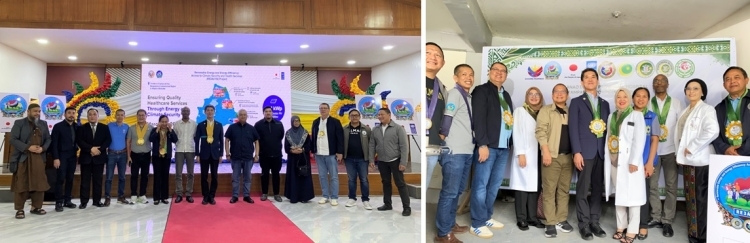
From 25 to 26 March 2026, Ambassador ENDO Kazuya visited Lanao del Sur and Marawi City in the Bangsamoro Autonomous Region in Muslim Mindanao (BARMM).
Under the Japan-Bangsamoro Initiatives for Reconstruction and Development (J-BIRD), the Government of Japan has supported the progress of the Mindanao peace process for over 20 years.
1. Launching Ceremony of the Solar Power Generation System for the "Renewable Energy and Energy Efficiency: Access to Climate Security and Health Services (RE3ACHS) Project” in Lanao del Sur.
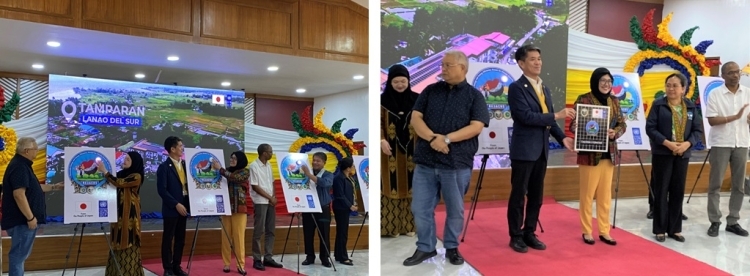
On 25 to 26 March 2026, Ambassador Endo attended two launching ceremonies for the solar power generation system installed under the Government of Japan’s grant aid "Renewable Energy and Energy Efficiency: Access to Climate Security and Health Services (RE3ACHS) Project” at a provincial infirmary in Marawi City and at the Tamparan Provincial Hospital in Lanao del Sur, respectively.
The launching ceremonies were attended by Lanao del Sur Governor Mamintal Adiong Jr., Ministry of Health of the Bangsamoro Transition Authority Minister Kadil Sinolinding, the United Nations Development Programme (UNDP) Philippines Office Deputy Resident Representative Edwin Carrié, and officials from the Department of Energy (DOE), among others.
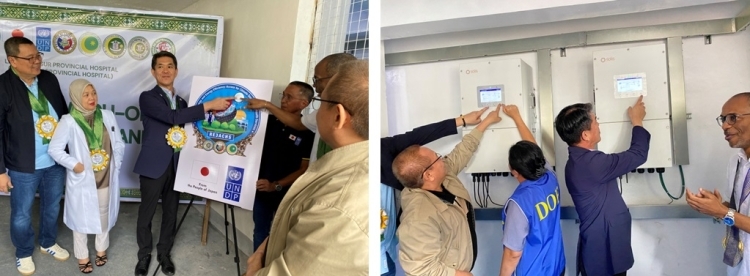
In BARMM, a conflict-affected region, the power supply shortages are severe. Medical facilities, especially in Lanao del Sur province, which account for one-third of the region's population, rely on diesel power generation and have always faced risks in stable power supply. To reduce this risk, the introduction of reliable and clean solar power generation has become an urgent priority.
The Government of Japan contributed 200 million yen (approximately 1.5 million US dollars) to UNDP to implement this project, which aims to strengthen climate resilience and energy security in Lanao del Sur by enhancing the capacity of local governments to plan for renewable energy and energy efficiency. The project also strives to secure investment budgets for future renewable energy expansion, while also introducing solar power generation systems as renewable energy sources in healthcare facilities in the province.
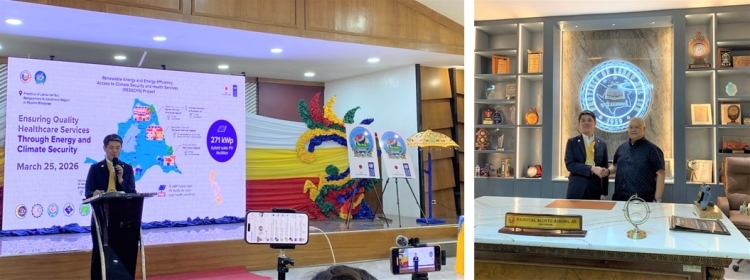
Ambassador Endo expressed his expectation that this project would serve as a model and contribute to stable power supply and expanded healthcare services through continued investment in renewable energy, including solar power generation by the BARMM government and local governments for a more climate resilient future.
2. Visit to the 103rd Base of the Moro Islamic Liberation Front (MILF)
On March 26, Ambassador Endo visited the 103rd Base of the Moro Islamic Liberation Front (MILF) in Lanao del Sur and inspected the projects previously implemented to strengthen food security and improve livelihoods. He also visited the Maguindanao outpost of the Joint Peace and Security Teams (JPST), whose capacity-building the Government of Japan supported through the International Organization for Migration (IOM) from 2024 to 2025, and confirmed that the provided communication equipment, motorcycles, and other items were being utilized. The visit to the 103rd Base was led by a joint team comprising the Armed Forces of the Philippines, the Philippine National Police, and the Moro Islamic Liberation Front (MILF).
This visit reaffirmed the effectiveness of past assistance, in addition to the ongoing assistance being implemented by Japan, and further deepened the cooperative relationship with BARMM. The Government of Japan will continue to provide support in cooperation with various stakeholders and related organizations to achieve lasting peace and inclusive development in the region.
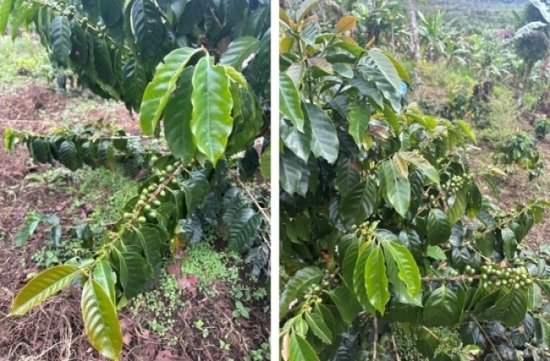
(Reference)
Through the 2.3 million USD contribution to UNDP under the FY2022 supplementary budget, the "Project for Strengthening Food Security and Livelihood Improvement in Bangsamoro" project was implemented. This project targeted the BARMM region and surrounding provinces (a total of 10 provinces), providing food assistance to approximately 4,000 households in 33 communities where the food crisis was severe at the time. In addition, 74,000 fruit tree seedlings and other saplings were planted, and 44 community groups (approximately 60,000 residents) received agricultural technical guidance, entrepreneurship support for women and youth, tourism promotion support, and poultry farming technical guidance and equipment provision. Base 103 was one of the targeted communities, receiving food assistance, coffee, indigenous seedling provision, and livelihood support training. Currently, the coffee trees have grown to bear fruit, and these supports are expected to contribute to the future livelihood improvement of the local communities.
---------------------------------------------------
1. Remarks of Ambassador ENDO Kazuya at the Launching Ceremony of the Solar Power Generation System for the RE3ACHS Project
2. Remarks of Ambassador ENDO Kazuya during the Lanao Del Sur Scale Up Project Renewable Energy and Energy Efficiency Access for Climate Security and Health Services (RE3ACHS)